
Key Insights & Executive Summary
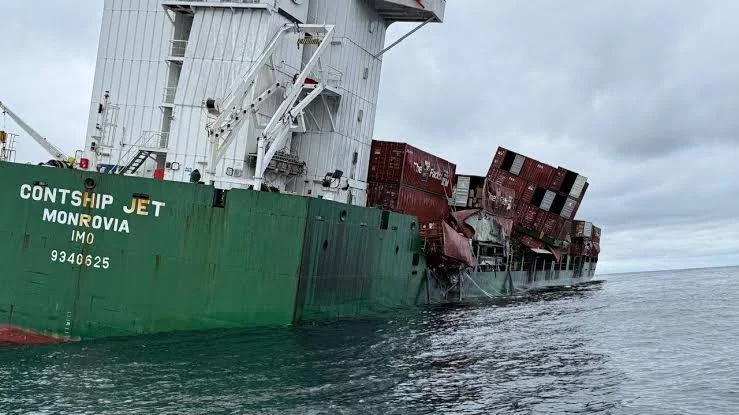
On 28 October 2026, the container ship Contship Jet, chartered by ZIM on the Haifa–Constanța route, was hit by naval drones off Cape Kaliakra; all 18 crew were rescued. Black Sea war-risk premiums are rising, and Romanian importers can use the Port of Koper (Slovenia), with rail and road links to Romania, via Arwen Olsen.
📊 Where insurance stands today
This is not an isolated incident. More than 570 vessels have been attacked in the Black Sea in 2026, with at least 40 seafarers killed, and nine merchant ships were struck in Romanian and Bulgarian waters in October alone.
The London market has already reacted: the Joint War Committee has extended its listed area to almost the entire Black Sea, excluding only the territorial waters of Türkiye, Romania, Bulgaria and Georgia. For now, additional war-risk premiums for transits to Romania and Bulgaria remain between 0.4% and 1% of hull value — up from 0.1% a month ago. For Ukrainian and Russian port calls, however, premiums reach 15% or more.
⚠️ The scenario that worries us: what if the major insurers say “no”?
The “safe” corridor to Constanța relies on ships sailing within Bulgarian and Romanian territorial waters. Today’s attack, just a few miles from that line, calls exactly this corridor into question. Analysts had already warned that if attacks spread into Romanian and Bulgarian territorial waters, insurance terms would change again.
In practical terms, for a Romanian importer this could mean:
• Much higher war-risk premiums, quickly passed on into freight as War Risk Surcharges on every container.
• Fewer services and fewer calls at Constanța. Some operators have already withdrawn from Black Sea routes, while others deploy older vessels — some up to 50 years old — to keep insurance costs down.
• Extra transhipments (Piraeus, Istanbul) → longer transit times, delays, stranded containers.
• Cargo insurance becomes more expensive or harder to obtain, and in case of a total loss, procedures such as general average can tie up the remaining cargo for months.
In other words: even when the ship arrives, cost and uncertainty go up. And for businesses running lean stock and tight deadlines, unpredictability hurts as much as price.
The alternative for Romanian cargo: the Port of Koper, Slovenia
For imports from Asia and the Eastern Mediterranean, Koper is a real gateway into Central Europe — without the Black Sea transit. A few key points:
✓ It is the first Adriatic port of call for direct Asia services, with indicative transit times of around 27 days from Shanghai and 4 days from Haifa.
✓ It has regular rail connections to Romania — Koper – Budapest – Arad and Ploiești – Budapest – Koper — plus direct trucking.
✓ Cargo stays on EU territory from discharge to destination, on predictable land routes.
Of course, it is not a one-size-fits-all solution: the rail or road leg adds cost, and for some cargo Constanța remains the right choice. That is exactly why the route is worth comparing case by case before your next order.
🤝 Arwen Olsen can help
At Arwen Olsen we offer container transport via the Port of Koper, with onward rail or road delivery to your warehouse in Romania. We will prepare a side-by-side quote — Constanța vs. Koper — covering total cost, transit time and risk, so you can decide with full information.
📩 Write to us or visit www.arwen-olsen.ro
#BlackSea #Logistics #Shipping #Import #Constanta #Koper #FreightForwarding #SupplyChain #ArwenOlsen
Explore Arwen Olsen Logistics & Trade Corridors
Need Specialized Freight Solutions?
Calculate instant sea, rail, or air shipping rates with our online calculator.